

What is the mounting position for a cross arm beam sensor?
Leave a message

Hey there! As a supplier of cross arm beam sensors, I often get asked about the best mounting positions for these nifty devices. So, I thought I'd take a moment to break it down for you.
First off, let's talk a bit about what a cross arm beam sensor is. It's a type of force sensor that's super useful in a bunch of different applications, like industrial weighing and measuring systems. These sensors are designed to accurately detect and measure forces applied to them, and their performance can be greatly affected by how they're mounted.

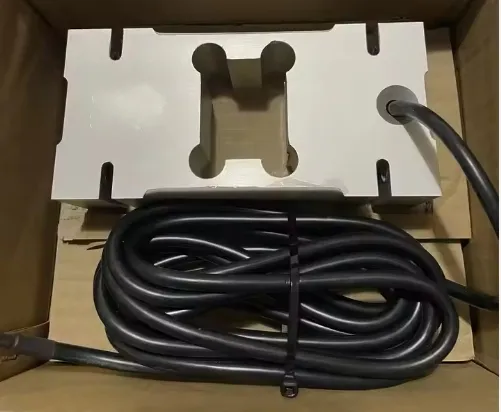
Ideal Mounting Positions
One of the most common and ideal mounting positions for a cross arm beam sensor is in a horizontal orientation. When mounted horizontally, the sensor can evenly distribute the load across its structure. This helps to ensure accurate force measurements because the internal components of the sensor are designed to work optimally under a balanced load. For example, in a weighing scale application, a horizontally mounted cross arm beam sensor can provide precise weight readings.
Another great option is a vertical mounting position. In some industrial settings, vertical mounting might be necessary due to space constraints or the nature of the equipment. When mounted vertically, the sensor can still function well as long as it's properly supported. It's important to make sure that the load is applied directly along the axis of the sensor to avoid any off - center forces that could lead to inaccurate measurements.
Factors Affecting Mounting Position
There are several factors that you need to consider when choosing the mounting position for your cross arm beam sensor.
Load Distribution
The way the load is distributed on the sensor is crucial. If the load is not evenly distributed, it can cause stress concentrations in certain parts of the sensor, which can lead to inaccurate readings and even damage over time. For instance, if a heavy object is placed off - center on a sensor, it can create uneven forces that the sensor may not be able to handle properly.
Environmental Conditions
The environment where the sensor will be mounted also plays a big role. If the area is prone to vibrations, shocks, or extreme temperatures, you need to choose a mounting position that can minimize the impact of these factors. For example, in a factory with a lot of machinery vibrations, mounting the sensor in a location where it's less likely to be affected by these vibrations can improve its performance and lifespan.
Space Constraints
In many industrial setups, space is a precious commodity. You may have to choose a mounting position that fits within the available space. Sometimes, this might mean sacrificing the ideal horizontal or vertical orientation. However, with proper engineering and support, you can still get accurate readings from the sensor even in a less - than - ideal mounting position.
Mounting Considerations for Different Applications
Industrial Weighing
In industrial weighing applications, such as on a conveyor belt scale or a hopper scale, the cross arm beam sensor needs to be mounted in a way that allows it to accurately measure the weight of the materials passing over or being stored in the equipment. For conveyor belt scales, a horizontal mounting position is often preferred as it can provide stable and accurate weight measurements as the materials move across the belt.
Force Measurement in Machinery
When used in machinery to measure forces, like in a robotic arm or a press machine, the mounting position depends on how the force is applied. In a robotic arm, the sensor might be mounted at the end - effector to measure the force exerted during grasping or manipulation tasks. In a press machine, it could be mounted between the moving parts to measure the pressing force.
Importance of Proper Mounting
Proper mounting of a cross arm beam sensor is not just about getting accurate measurements. It also affects the sensor's durability and reliability. A poorly mounted sensor is more likely to experience premature wear and tear, which can lead to costly replacements and downtime.
For example, if a sensor is mounted in a way that exposes it to excessive vibrations, the internal components can become loose or damaged over time. This can result in inaccurate readings and even complete sensor failure. On the other hand, a well - mounted sensor can last for a long time and provide consistent and reliable performance.
Related Products
If you're interested in cross arm beam sensors, we also offer a range of related products. Check out our Single point force sensors which are great for applications where you need to measure a single point of force. Our Cross Arm Beam Sensor is a high - quality option for various force measurement needs. And for those looking for a parallel beam design, our Parallel Beam Load Cell could be the perfect fit.
Conclusion
So, there you have it! The mounting position for a cross arm beam sensor depends on a variety of factors, including load distribution, environmental conditions, and space constraints. Whether it's a horizontal or vertical mounting, or a position that's tailored to a specific application, choosing the right mounting position is crucial for getting accurate measurements and ensuring the long - term performance of the sensor.
If you're in the market for cross arm beam sensors or have any questions about mounting positions or our products, don't hesitate to reach out. We're here to help you find the best solution for your needs. Let's have a chat about your requirements and see how we can work together to get the most out of these amazing sensors.
References
- "Force Sensor Handbook" - A comprehensive guide on force sensors and their applications.
- Industry research papers on industrial weighing and force measurement technologies.


