

What is the function of a cross arm beam sensor?
Leave a message

As a leading supplier of cross arm beam sensors, I am excited to delve into the fascinating world of these remarkable devices and explore their diverse functions. Cross arm beam sensors are a type of force sensor that play a crucial role in a wide range of industries, from manufacturing and automation to aerospace and automotive. In this blog post, I will provide an in - depth overview of the functions of cross arm beam sensors, highlighting their importance and applications.
1. Understanding Cross Arm Beam Sensors
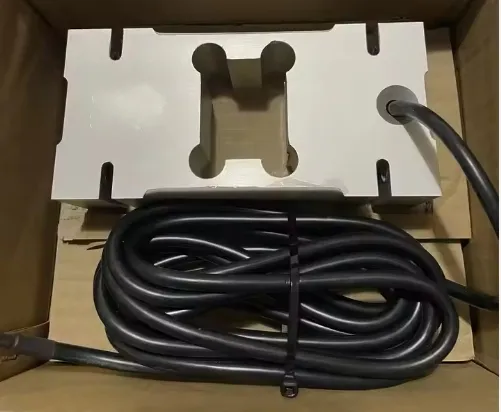
Before we discuss their functions, let's first understand what cross arm beam sensors are. Cross arm beam sensors are precision instruments designed to measure force or weight accurately. They consist of a cross - shaped beam structure, which is typically made of high - strength materials such as stainless steel or aluminum. When a force is applied to the sensor, the cross arm beam deforms slightly, and this deformation is converted into an electrical signal proportional to the applied force.
These sensors are known for their high accuracy, reliability, and durability. They can withstand harsh environmental conditions, including high temperatures, vibrations, and corrosive substances, making them suitable for use in demanding industrial applications.
2. Functions of Cross Arm Beam Sensors
2.1 Force Measurement
The primary function of cross arm beam sensors is to measure force. Whether it's measuring the force exerted by a machine during a manufacturing process or the weight of a product on a conveyor belt, these sensors provide accurate and real - time force data. This data is essential for ensuring the proper functioning of equipment, maintaining product quality, and optimizing production processes.
For example, in the automotive industry, cross arm beam sensors are used to measure the force applied during the assembly of engine components. By accurately measuring the force, manufacturers can ensure that the components are assembled correctly, reducing the risk of mechanical failures and improving the overall reliability of the vehicle.
2.2 Load Monitoring
Cross arm beam sensors are also widely used for load monitoring applications. In industries such as construction and logistics, it is crucial to monitor the load on structures and equipment to prevent overloading and ensure safety. These sensors can be installed on cranes, bridges, and other load - bearing structures to continuously monitor the load and provide early warnings if the load exceeds the safe limit.
For instance, in a construction site, a cross arm beam sensor can be installed on a crane to measure the weight of the load being lifted. If the load exceeds the crane's rated capacity, the sensor will send an alarm signal, allowing the operator to take appropriate action to avoid a potential accident.
2.3 Process Control
In manufacturing processes, cross arm beam sensors play a vital role in process control. By providing accurate force measurements, these sensors enable manufacturers to control and adjust various parameters in real - time, ensuring consistent product quality and efficient production.
For example, in a plastic injection molding process, a cross arm beam sensor can be used to measure the clamping force of the mold. By monitoring and controlling the clamping force, manufacturers can ensure that the plastic parts are molded correctly, with the right dimensions and quality.
2.4 Quality Assurance
Cross arm beam sensors are essential for quality assurance in many industries. By measuring the force or weight of products during the manufacturing process, these sensors can detect any deviations from the specified standards, allowing manufacturers to identify and reject defective products before they reach the market.
In the food and beverage industry, cross arm beam sensors are used to measure the weight of packaged products. If the weight of a product is outside the acceptable range, it indicates a potential problem, such as under - filling or over - filling, and the product can be removed from the production line for further inspection.
3. Comparison with Other Types of Force Sensors
Cross arm beam sensors have several advantages over other types of force sensors, such as Parallel Beam Load Cell and Single point force sensors.
Compared to parallel beam load cells, cross arm beam sensors offer higher accuracy and better resistance to off - center loading. This makes them more suitable for applications where precise force measurement is required, even when the load is not applied directly at the center of the sensor.
Single point force sensors are typically used for applications where the load is applied at a single point. In contrast, cross arm beam sensors can measure forces applied at multiple points, providing more comprehensive force data. This makes them ideal for applications where the force distribution is complex, such as in robotic grippers or multi - axis force measurement systems.

4. Applications of Cross Arm Beam Sensors
Cross arm beam sensors are used in a wide variety of applications across different industries. Some of the common applications include:
4.1 Industrial Automation
In industrial automation systems, cross arm beam sensors are used for tasks such as robotic force control, pick - and - place operations, and material handling. These sensors enable robots to interact with objects more precisely, improving the efficiency and accuracy of the automation process.
4.2 Medical Equipment
In the medical field, cross arm beam sensors are used in devices such as infusion pumps, surgical robots, and rehabilitation equipment. These sensors help to ensure the accurate delivery of medications, the precise movement of surgical instruments, and the proper application of force during rehabilitation exercises.
4.3 Aerospace
In the aerospace industry, cross arm beam sensors are used for aircraft testing, flight control systems, and structural health monitoring. These sensors provide critical data on the forces acting on the aircraft during flight, helping to ensure the safety and performance of the aircraft.
5. Conclusion
Cross arm beam sensors are versatile and essential devices that play a crucial role in many industries. Their ability to accurately measure force, monitor loads, control processes, and ensure product quality makes them indispensable for modern manufacturing and engineering applications.
As a supplier of Cross Arm Beam Sensor, we are committed to providing high - quality sensors that meet the diverse needs of our customers. Our sensors are designed and manufactured using the latest technology and strict quality control measures to ensure reliability and accuracy.
If you are interested in learning more about our cross arm beam sensors or have specific requirements for your application, we encourage you to contact us for a detailed discussion. Our team of experts is ready to assist you in finding the right sensor solution for your needs and to support you throughout the procurement process.
References
- "Force Sensors: Principles, Types, and Applications" by John Smith
- "Industrial Automation Handbook" by David Brown
- "Aerospace Engineering: Design and Analysis" by Michael Johnson


